 ProNexus Admin
Year-End Close is Done – Now What?
 ProNexus Admin : Jan 2, 2026, 10:04:53 AM
Optimize your accounting with post-close reviews, ensuring accurate financials, improved processes, and strategic alignment for a stronger 2026 ahead.
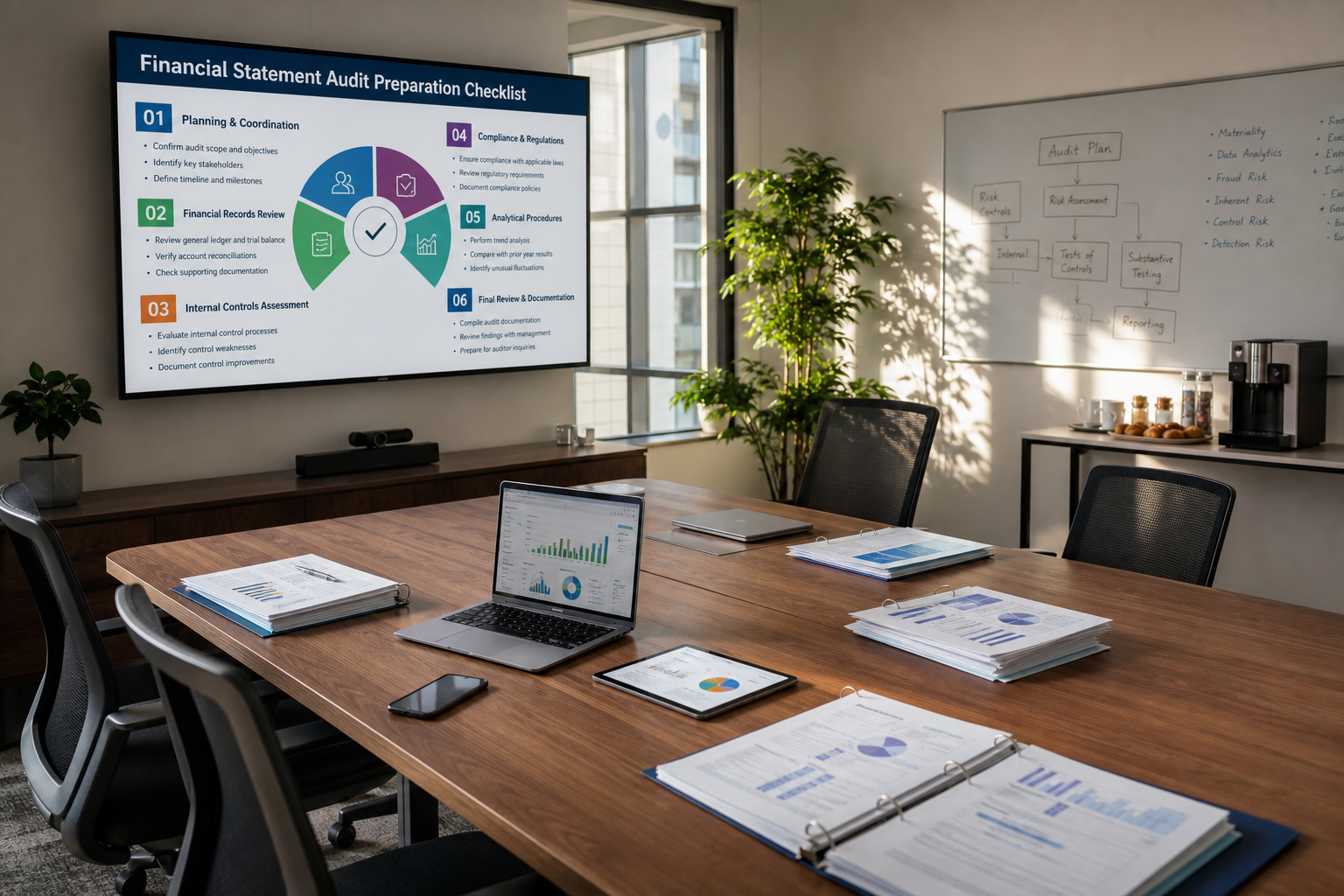
Preparing for a financial statement audit can put significant pressure on an accounting and finance team, especially when audit preparation is added to an already full workload.
For CFOs, Controllers, and finance leaders, successful financial statement audit preparation starts well before the auditors arrive. Accounts must be reconciled, schedules need to be complete, supporting documentation must be organized, and outstanding accounting issues should be identified and addressed.
The short answer: To prepare for a financial statement audit, finance teams should close and reconcile the general ledger, prepare supporting schedules, organize documentation, review significant transactions and estimates, address prior-year audit findings, and establish a clear process for managing auditor requests.
The checklist below can help CFOs evaluate whether their organization is truly audit-ready and identify where additional audit preparation support may be needed.
Before audit fieldwork begins, the accounting records should be as complete and accurate as possible.
Confirm that your team has:
The goal is to provide auditors with a stable set of financial records rather than continuing to make significant adjustments during fieldwork.
Balance sheet reconciliations are one of the foundations of audit readiness.
Complete and review reconciliations for significant accounts, including:
Each reconciliation should tie directly to the general ledger and include supporting documentation for the ending balance.
Unexplained differences, stale reconciling items, or unsupported balances should be investigated before they become auditor questions.
Your auditor will typically provide a PBC (Prepared by Client) list outlining the schedules and documents needed for the audit.
Common audit schedules may include:
Assign an owner and due date to each PBC request.
A centralized audit request tracker can also help the CFO or Controller monitor what has been requested, who owns it, when it is due, and whether it has been submitted.
Auditors need more than schedules. They also need evidence supporting the transactions and balances being tested.
Gather relevant documentation such as:
Create a logical, centralized folder structure so documents can be retrieved quickly when audit samples are selected.
Good documentation can significantly reduce the time employees spend searching for support during fieldwork.
Before the audit begins, CFOs should identify accounting areas that are likely to receive additional scrutiny.
Depending on the organization, these may include:
Discuss complex or unusual accounting matters internally before fieldwork begins. When appropriate, communicate with the audit team early rather than waiting for an issue to surface during testing.
Audit teams may test manual journal entries and unusual transactions as part of their procedures.
Before the audit, review:
Make sure material entries have a clear business purpose, appropriate approval, and sufficient documentation.
Do not wait for the auditors to ask whether previous findings were addressed.
Review prior-year:
Document what changed and retain evidence showing how corrective actions were implemented.
Recurring findings can signal broader accounting process or internal control issues that may require attention beyond the audit itself.
Audit preparation is also an opportunity to evaluate whether key financial controls are operating as intended.
Review areas such as:
Confirm that required reviews and approvals have actually been performed and documented.
For organizations with lean finance teams, segregation of duties may be particularly challenging. Finance leadership should understand where these limitations exist and what compensating controls are in place.
Even excellent preparation does not eliminate questions during fieldwork.
Auditors may request additional:
Establish a process for receiving, assigning, reviewing, and responding to these requests.
Whenever possible, have one person coordinate communication with the audit team. This can prevent duplicate requests and reduce interruptions across the organization.
One of the most overlooked parts of audit preparation is capacity.
Ask:
If several of these issues exist, additional support before fieldwork begins may be more efficient than trying to manage the audit with an already overloaded team.
Organizations may benefit from external audit preparation services when the work required to become audit-ready exceeds the capacity or expertise of the existing finance team.
This is particularly common when an organization is:
Managing significant growth or organizational change
Facing a compressed audit timeline
Trying to complete the audit without disrupting daily finance operations
External audit preparation support can provide temporary capacity without requiring the organization to permanently increase headcount.
Depending on the organization's needs, ProNexus can provide experienced accounting and finance professionals to assist with:
ProNexus is a non-attest accounting and finance firm. Our role is not to perform the independent financial statement audit. Instead, we work alongside your internal team to help prepare the organization for its independent auditors.
This distinction allows organizations to add accounting capacity where it is needed while maintaining the independence of the external audit function.
Audit preparation is rarely the only responsibility facing a CFO or Controller.
Your team still needs to process transactions, close the books, produce management reports, manage cash, support operations, and respond to leadership while preparing for the audit.
ProNexus can provide experienced accounting professionals on an interim or project basis to help close that capacity gap.
Support can be tailored to the situation, whether you need an experienced professional to own much of the audit preparation process or additional accounting resources to help your existing team complete reconciliations, schedules, and documentation.
The objective is straightforward: help your organization become audit-ready while allowing your finance team to keep the day-to-day accounting function moving.
Start by completing the financial close, reconciling material balance sheet accounts, preparing requested audit schedules, organizing supporting documentation, reviewing significant transactions and accounting estimates, addressing prior-year findings, and assigning responsibility for auditor requests.
An audit preparation checklist is a structured list of accounting, reconciliation, documentation, and coordination tasks that should be completed before and during a financial statement audit. It helps CFOs and Controllers track audit readiness and reduce last-minute requests.
PBC stands for "Prepared by Client." A PBC list is a list of schedules, reports, documents, and other information the external auditor requests from the organization being audited.
Preparation should begin well before fieldwork. Organizations with clean books and established audit processes may need less lead time, while organizations with reconciliation backlogs, staffing gaps, prior-year findings, or complex accounting issues should begin substantially earlier.
Yes. Organizations can use experienced external accounting professionals to assist with reconciliations, schedules, documentation, financial close activities, and management of auditor requests. The independent CPA firm remains responsible for performing the audit.
Yes. An interim Controller can provide experienced financial leadership during an audit, oversee the close and reconciliation process, manage PBC requests, coordinate with the external audit team, and help keep normal accounting operations moving.
Poor audit readiness can lead to additional auditor questions, delayed fieldwork, repeated requests, increased demands on internal employees, and potential delays in issuing financial statements. Identifying readiness gaps early gives management more time to address them.
If your upcoming audit is exposing capacity gaps, reconciliation backlogs, staffing shortages, or accounting issues, you do not necessarily need another permanent hire to get through it.
Whether you need project-based audit preparation support, additional accounting staff, or an interim Controller or CFO, ProNexus can build support around your organization's specific needs.
Talk with ProNexus about your upcoming audit and determine what level of support your finance team needs to be audit-ready.


 ProNexus Admin : Jan 2, 2026, 10:04:53 AM
Optimize your accounting with post-close reviews, ensuring accurate financials, improved processes, and strategic alignment for a stronger 2026 ahead.
 ProNexus Admin : Sep 30, 2026, 7:29:59 AM
Learn essential steps to take when your CFO or Controller departs unexpectedly, ensuring continuity and evaluating long-term finance needs.
 ProNexus Admin : Aug 19, 2026, 8:00:00 AM
Learn how to create board-ready nonprofit financial reports that enhance transparency, improve oversight, and facilitate informed decision-making.