Turning Orders into Revenue
At its core, the order-to-cash (O2C or OTC) process captures everything from when a customer places an order to when your business receives and records payment. It’s a fundamental cycle for any company that sells goods or services.
When this process runs smoothly, cash flow accelerates, customer satisfaction improves and operational efficiency takes off.
When this process runs smoothly, cash flow accelerates, customer satisfaction improves, and operational efficiency takes off.
What O2C Looks Like
O2C covers major steps including:
- Order management (receiving & validating the order)
- Fulfilment (shipping or delivering the product/service)
- Billing/invoicing
- Payment collection
- Reporting and analysis
In practice, the quicker you move from order placement to payment, the healthier your business finances will look.
O2C vs. Quote-to-Cash
An important distinction: While O2C starts at order placement, quote-to-cash (Q2C) covers the earlier phase where you generate a quote or proposal for customizable offerings. Q2C therefore includes additional steps like product/service configuration, quoting, negotiation, and contract creation before the order enters the O2C flow.
Why the Order-to-Cash Process Matters
Here’s why focusing on O2C is critical:
- Improves cash flow: Reducing the lag between order and payment gives you more liquidity and flexibility.
- Boosts operational visibility: By integrating order, fulfilment, invoicing and payment data you gain insight into days sales outstanding (DSO), order cycle times and other key metrics.
- Enhances customer experience: A seamless order-to-delivery-to-payment journey keeps customers happy and likely to return. Delays, errors or billing issues can damage your reputation.
- Reduces costs and risks: Manual, disconnected processes are error-prone. Automation leads to fewer disputes, fewer missed payments and fewer bottlenecks.
The Typical Order-to-Cash Workflow
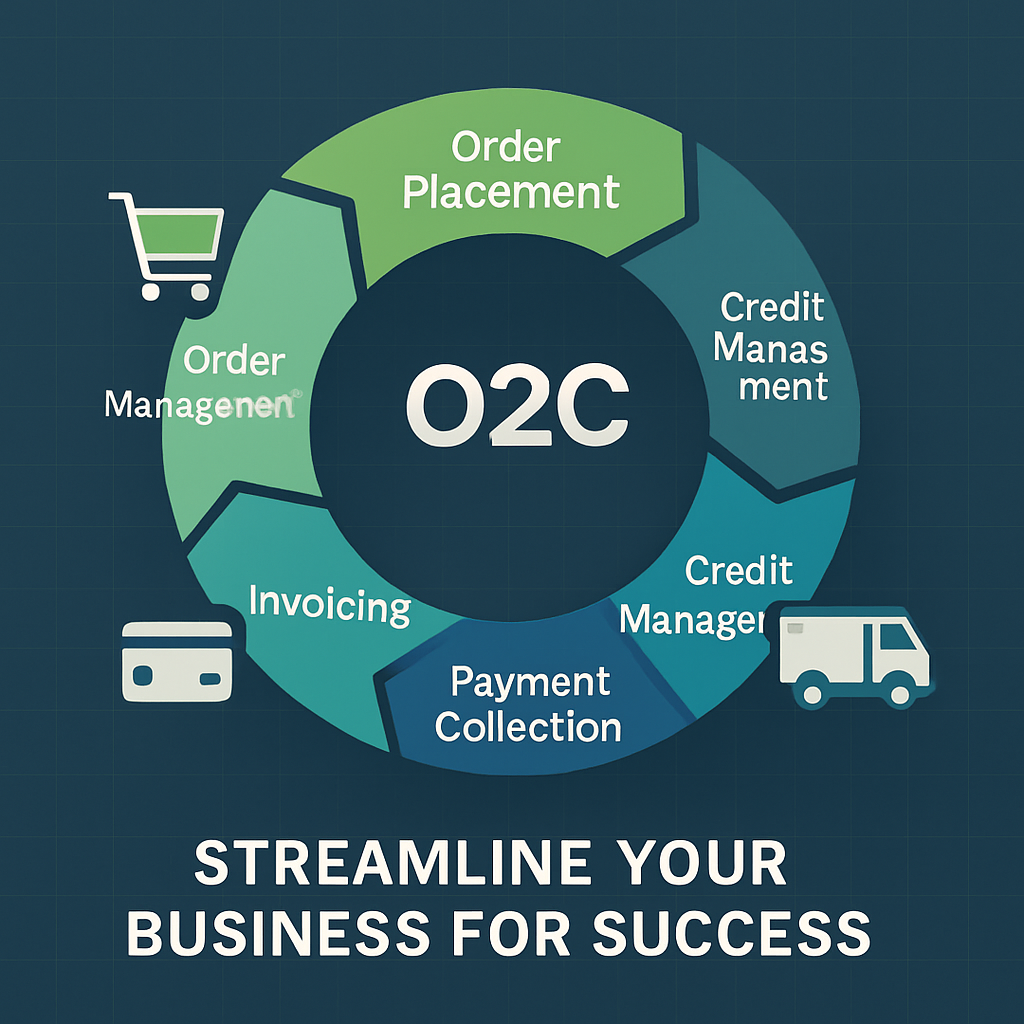
Below is a streamlined breakdown of the O2C cycle, showing how a customer’s order becomes cash in your account:
- Order placement – The moment a customer places an order (online, in-person, via sales rep). Accurate data capture is key.
- Order management – Validating the order, checking inventory, managing any credit or terms required.
- Credit management – If you offer credit terms, assess customer risk or credit limits before fulfilment.
- Order fulfilment/shipping – Picking, packing and delivering the goods (or delivering the service). Good logistics matter.
- Invoicing/billing – Issuing the invoice promptly once the order is fulfilled so the payment clock starts ticking.
- Accounts receivable & payment collection – Monitoring outstanding invoices, sending reminders, and applying payments when they come in.
- Reporting & optimization – Use analytics to assess cycle time, payment delays and where you can tighten things.
Common Challenges in O2C
Many businesses struggle with:
- Disconnected systems (sales, inventory, billing, AR) which lead to order delays and payment slippages.
- Manual invoicing and payment follow-up that slows down cash flow and increases errors.
- Poor visibility into order or payment status which makes forecasting and decision-making difficult.
Best Practices to Optimize Your O2C Process
To improve your O2C cycle, consider the following:
- Automate key steps (order validation, fulfilment triggers, invoice generation, payment reminders) to reduce delays and errors.
- Integrate systems: Ensure order management, inventory/shipping, billing and AR share the same data and workflows.
- Monitor KPIs like order cycle time, invoice processing time and DSO to spot problems early.
- Standardize processes across departments so hand-offs – from sales to fulfilment to billing – are seamless.
- Focus on customer experience: Provide order tracking, transparent invoicing and effortless payment options.
Final Thoughts
An effective order-to-cash process isn’t just operational, it’s strategic. It affects your cash flow, your customer relationships and your overall business agility. By tightening each link in the chain – from order capture to payment receipt – you position your organization for smoother growth and stronger financial health.
 ProNexus Admin
 ProNexus Admin : Oct 29, 2025, 8:00:00 AM